
ON STARTING
I was one of three on the flight from Chicago to Burlington. One of four or five on the flight before from San Francisco. The airport was hollowed out and hushed, a scene from some parallel universe with a clearly punctuated before and after. Scurrying from the plane to my rental car, I ripped the cinched handkerchief and cotton mask from my face. Water. I needed water.
It was July 9th, 2020 and we’d barely emerged from our cloistered, hilly neighborhood in months. I wasn’t particularly jazzed about traveling during this oblique time but we’d signed paperwork on an 1840s homestead three thousand miles away in Vermont and one of us needed to step foot on the land before we hoisted our life savings into this decades-long fever dream. I guzzled the last of my bottle and eased onto 1-89 South towards Montpelier. Before me, the gentle scribble of Mount Abraham and Camel’s Hump broke the impossibly incandescent horizon. My heart hastened. Was I driving home?
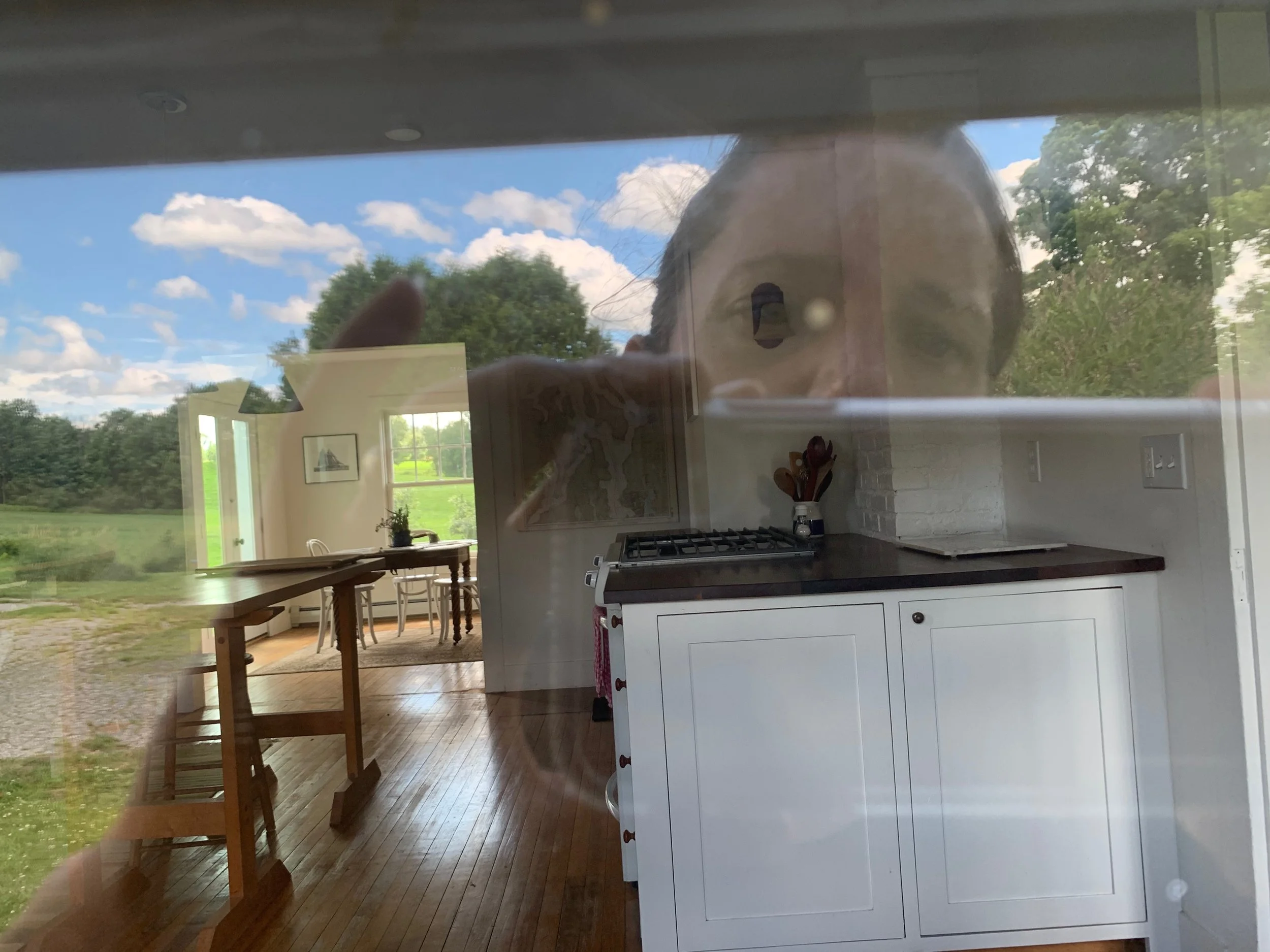
It took two weeks of quarantining to actually get into the house, two weeks and a drive South to Rutland for a lab administered Covid test. I camped out at a local ski mountain condo, hiking the lower section of treacherously steep runs each morning. In the afternoon, I’d walk the property and gawk through each of the first floor windows. I sent Heath a daily stream of poorly shot video and half baked ideas about where the couch and looms might live. I began mapping out the homestead garden, overwhelmed by the sheer expanse of pasture. We’d spent most of our recent adult lives in urban areas where a single raised bed felt opulent. Through my work, we touched down on farms with some consistency, but for 48 hours at a time, at most. Were the world not slogging through a mass tragedy, I’m not sure we would’ve leapt. I like to romanticize an immediate resonance with this land but it’s hard to parse how much of that was purely existential angst. We closed on August 28th, the attorney’s voice rattling through the speakers of our Prius somewhere in the middle of Utah.
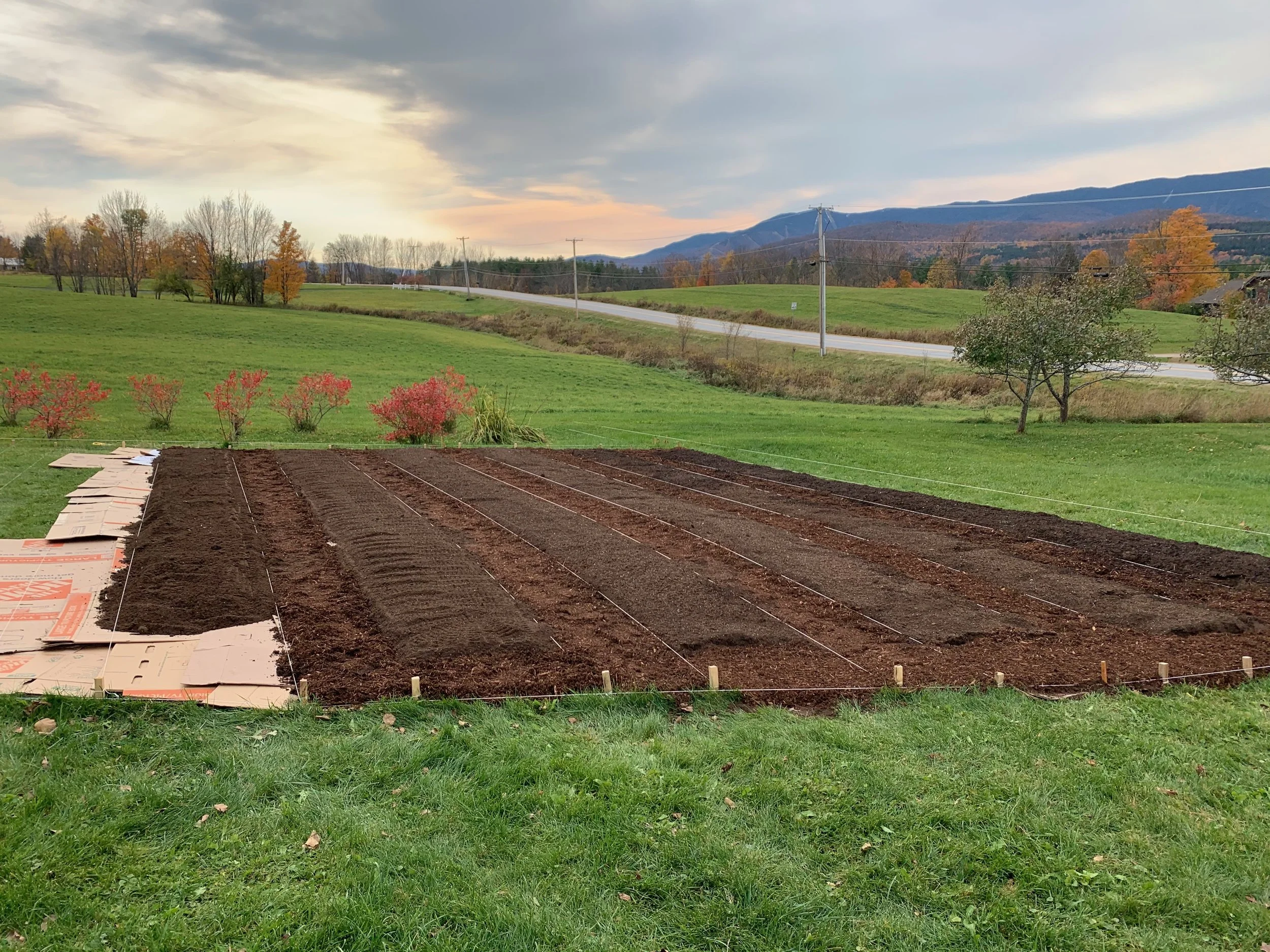
The act of building a farm beginning in your late 40’s, turns out, is not wildly popular. And for clear reasons. After a day of weeding, the grizzled sounds emanating from my knees are hard to ignore. Any plan we had for building savings was quickly usurped by servicing every want and need this land suggests. Too, so much of your effort simply fails- last Summer’s riddled cabbages, the currants overtaken by downy mildew, same for the butternut squash. Still, we could not be more ardent for all of it. Fell Fields is as much an expression of fierce wanting as it is of patient labor. The wanting drives every decision we make around how to do right by 7.8 acres of mostly pasture and boggy swale. The patience is a persistent reckoning with the very real fact that much of what we do will far outlive us, coming into its most ecstatic state many years from whatever day we rooted it in place.
We waited until year two to do much of anything with the land. That Spring, I heard my first Bobolink as a mating pair heckled our dog to steer clear of their nest. The swale became entirely choral from May to late August, fledgling Red Winged Blackbirds zooming in and out of waist high grass. We’ve left that part of the land alone and refuse the common advice to hay it once or twice a season. For that, we’ve been rewarded with increasing numbers of ground nesting birds every year.
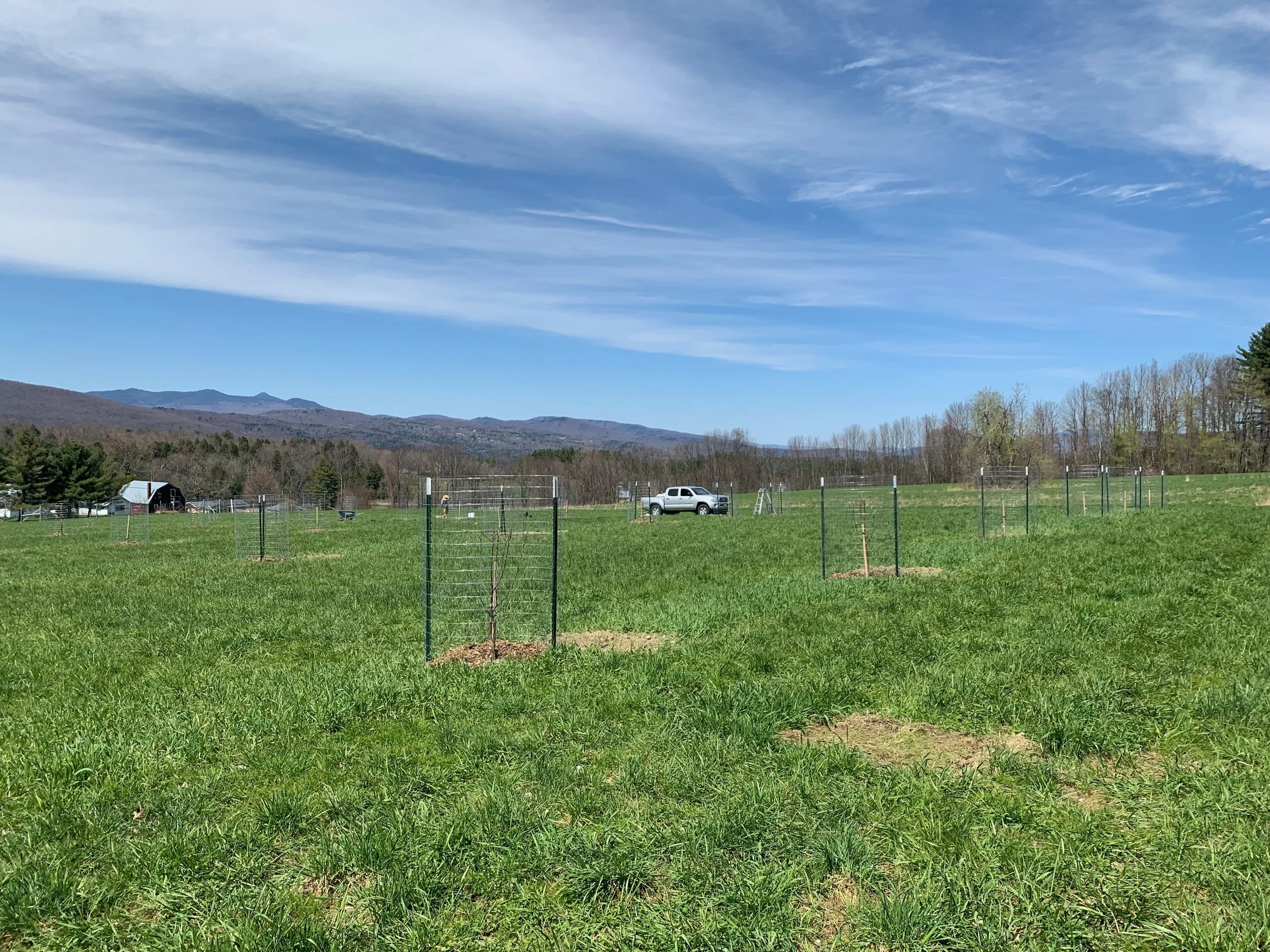
On the eastern slope, we planted 42 apple trees, bare root, and surrounded them with wire cages that make our very young orchard visible from the road. These are varieties meant mostly for cider and spirits, both of which we intend to bottle. Our homestead garden is oversized and riotous. We mix flowers and vegetables along thirty inch wide rows designed as permanent beds. Blueberries and six windswept Honeycrisp trees were here when we moved in. They anchor the new garden and give us a little shade in the heat of July.
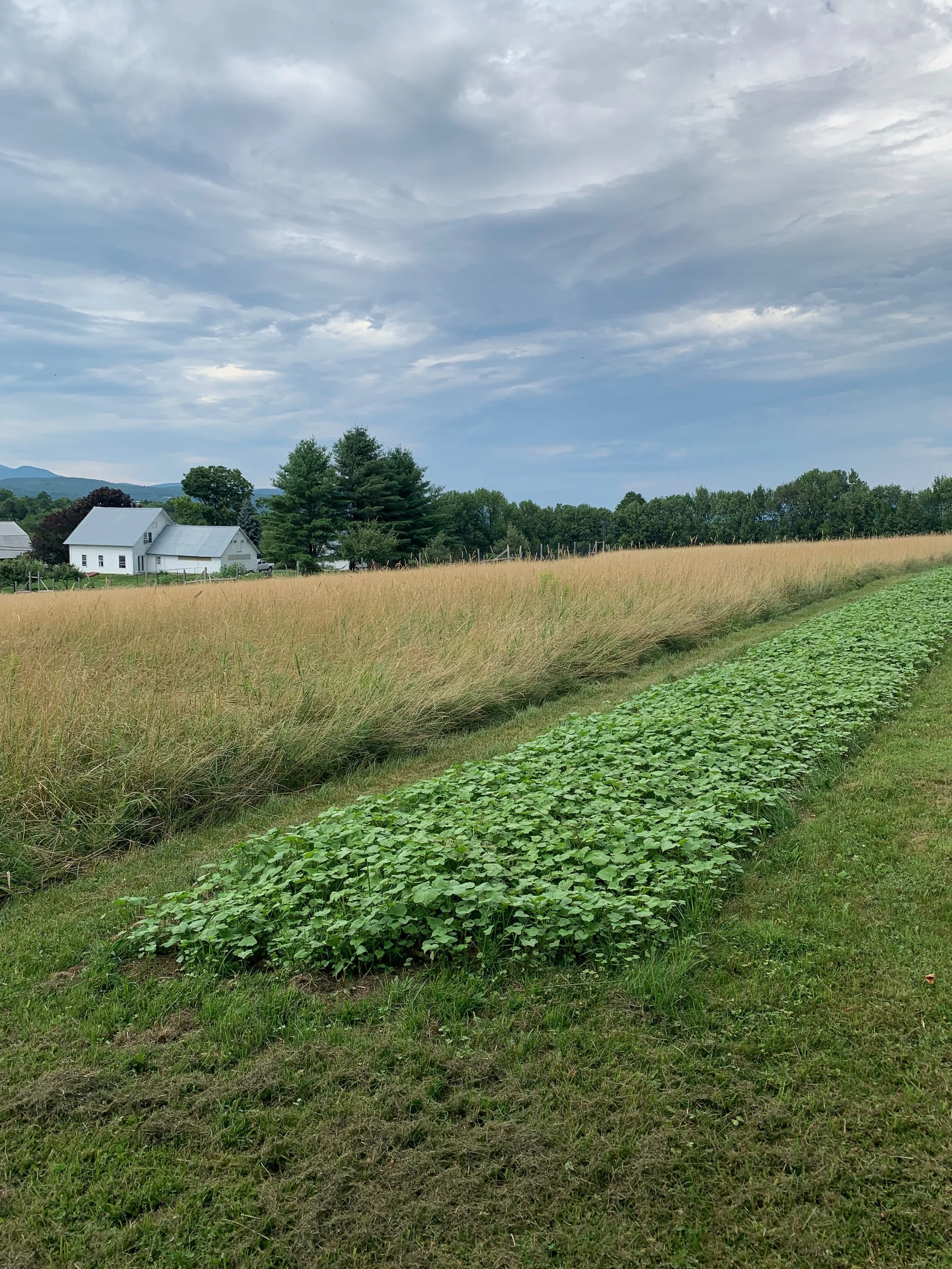
Our design approach is underpinned by who we are as stewards. Both of us have long careers in fighting climate change. We are steeped in the principles of permaculture and sustainability. Still, nothing can fully prepare you for what a specific landscape actually wants. What we believed we would do here has shifted, consistently, as we’ve become more attuned to every undulation, every wind pattern, every slant of the sun.
What was once considered space for a market garden will now become a cluster of perennial kin- hazelnut, plum, mulberry and sage. Asparagus will grow wild in the upper field. Strawberries, too. Sheep will help us manage the orchard, zigzagging east to west through the wide alleys between each row of fruit. You’ll come to dinner here, one day, and traverse the winding paths before sitting alongside a stranger or two. My looms will find space to clatter and hum in the small mill we plan to erect two years from this Spring.