
BLUEBERRY
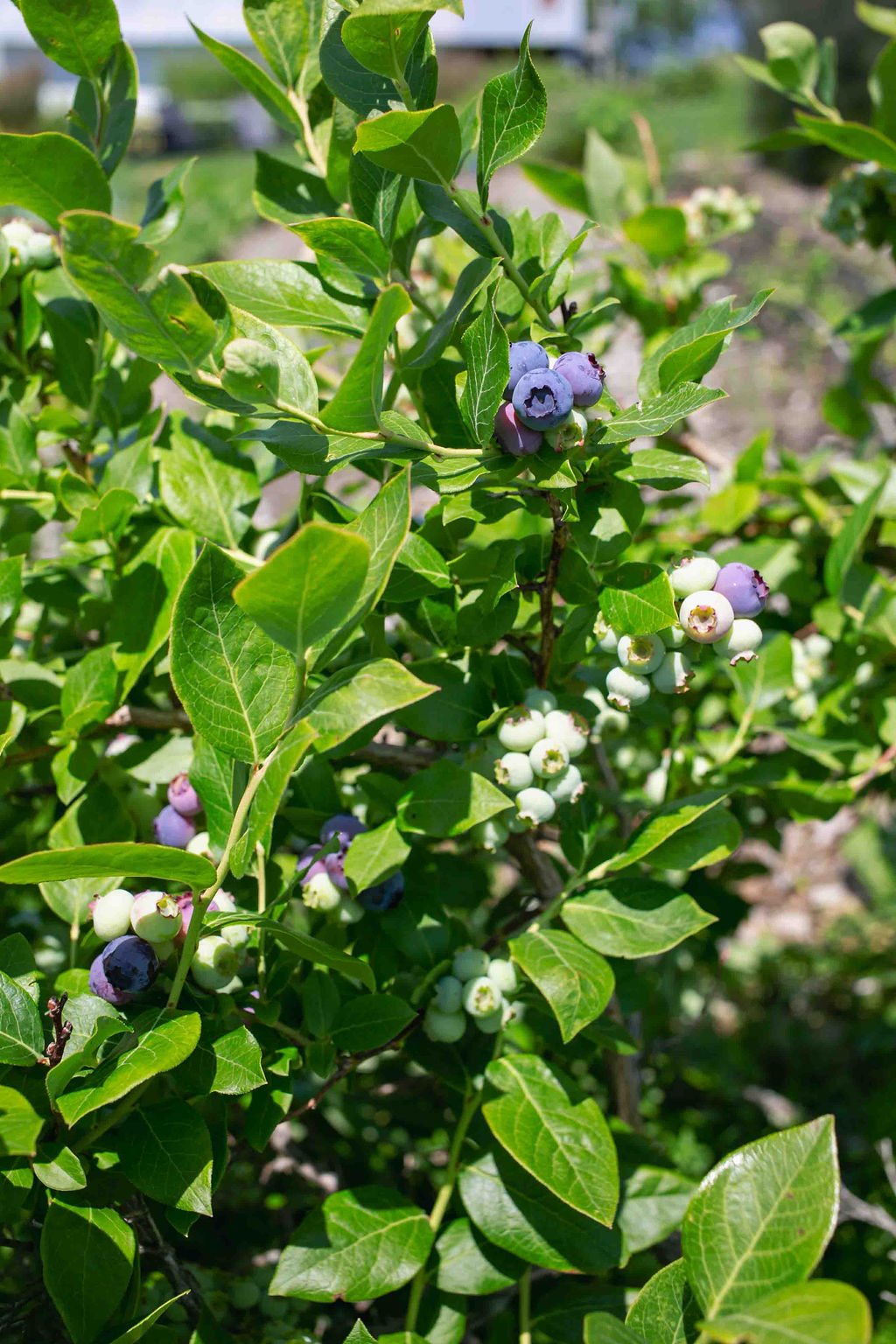
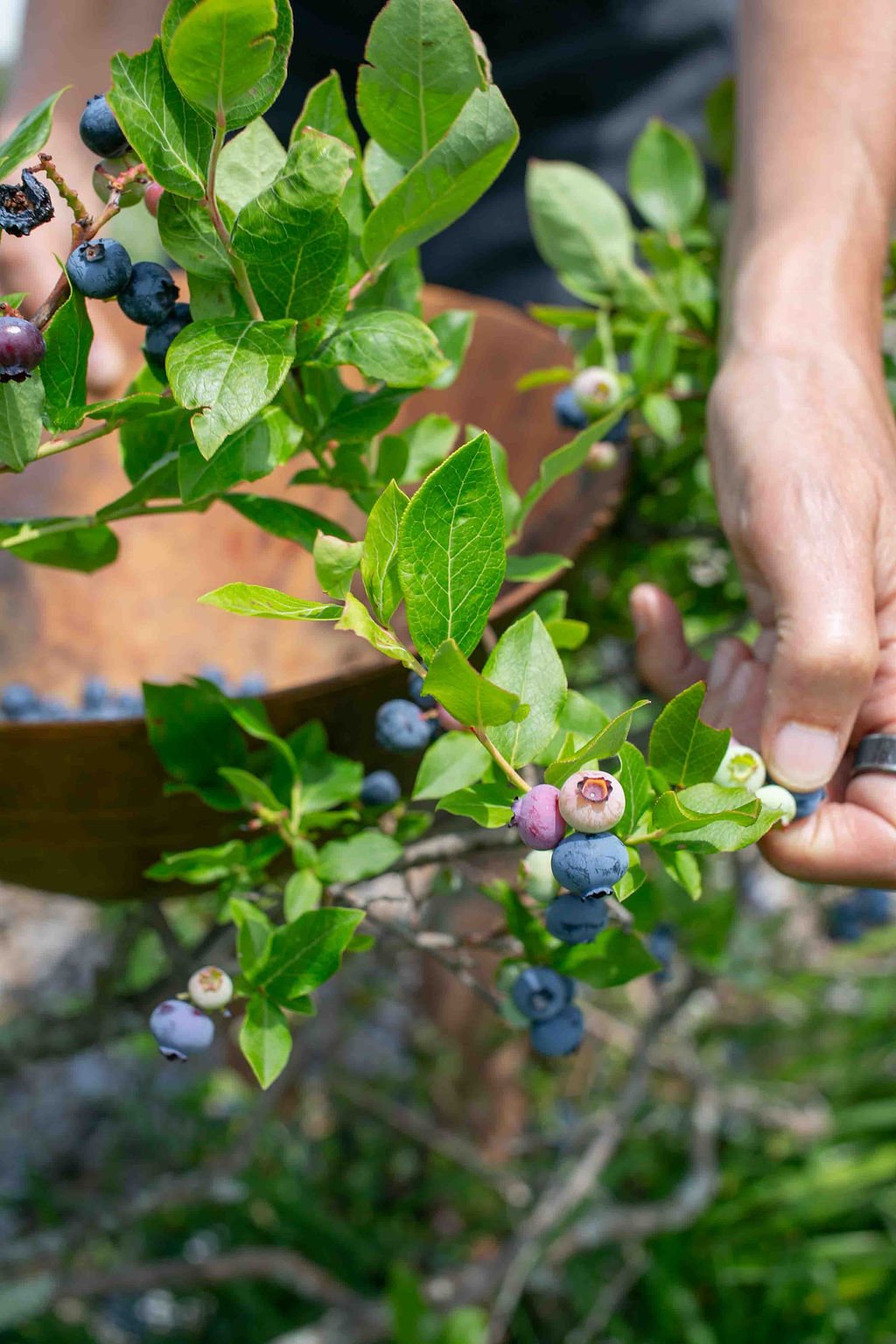
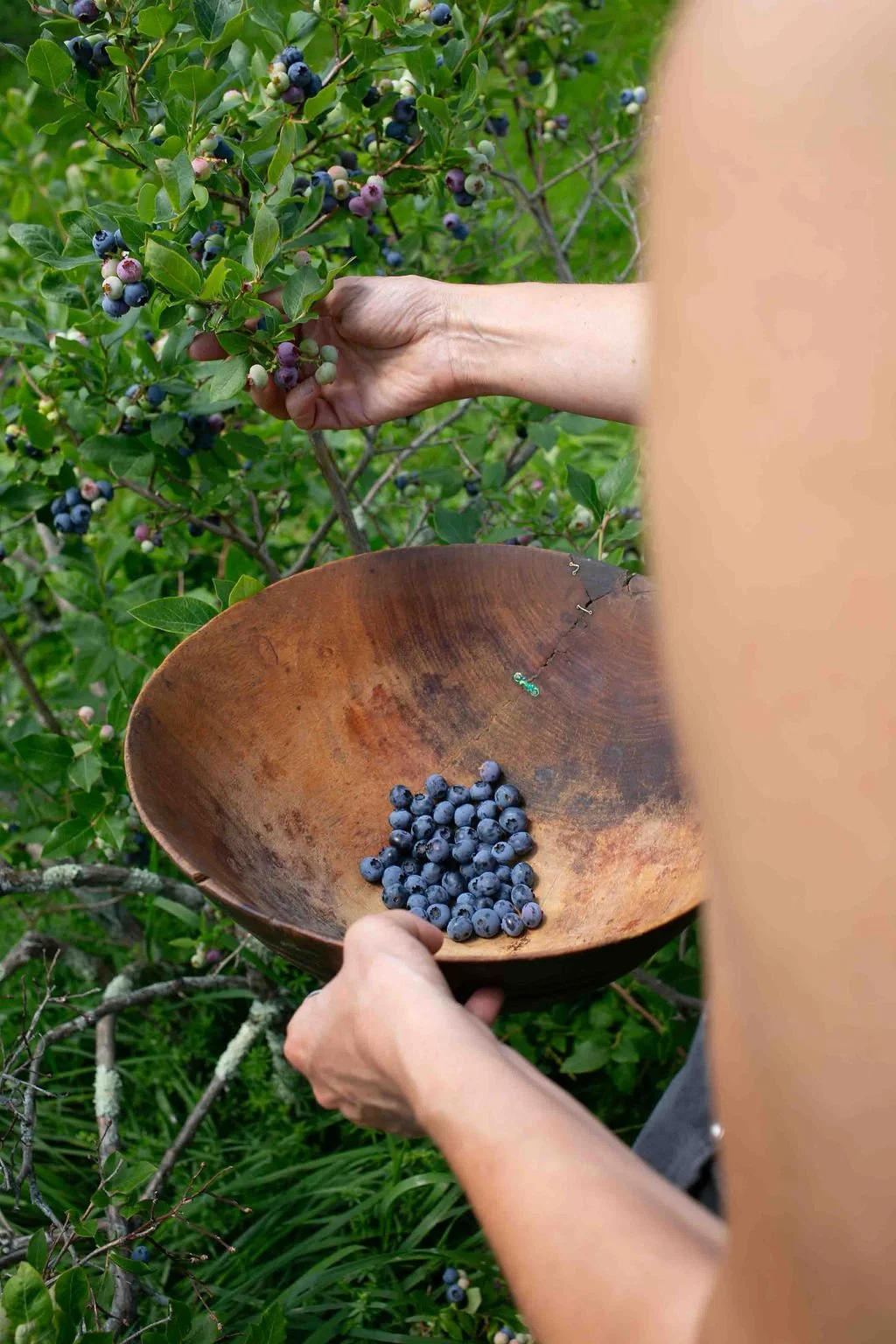
I first noticed the blueberries while walking the property for the second time. I might have written them off as scraggly shrubs had it not been for a wash of indigo painting its way through verdant clusters. There was so much competing for my attention that day- downy clouds that I’ve now come to recognize as endemic to high summer, the narrow clapboard of a house still unfamiliar, the swaying of ochre grass, almost tidal, that seemed endless yet for the distant tree line. Slipping a few ripe berries into my mouth, I registered all fourteen of the bushes running east to west in parallel lines. Day lilies took up space between half of the plants, not quite an after thought but not particularly planned either. Neglect was evident, though manageable.
Months later, we’d come to understand the blueberries as an obvious anchor point for the rest of our homestead garden, a hedgerow to separate two blocks of vegetables and flowers. That they were mature in their production of fruit felt like an encouragement to everything else far more juvenile around them- lettuces from seed, bronze fennel as a young transplant, cosmos on their way to a single, explosive season. All told, we’ve done little to reverse the neglect. We prune every other year, weed near the base, and occasionally offer a drink of fish emulsion or compost. They are our steady providers, kicking off endless quart sized bags for our freezer and a bottomless buffet for song birds.
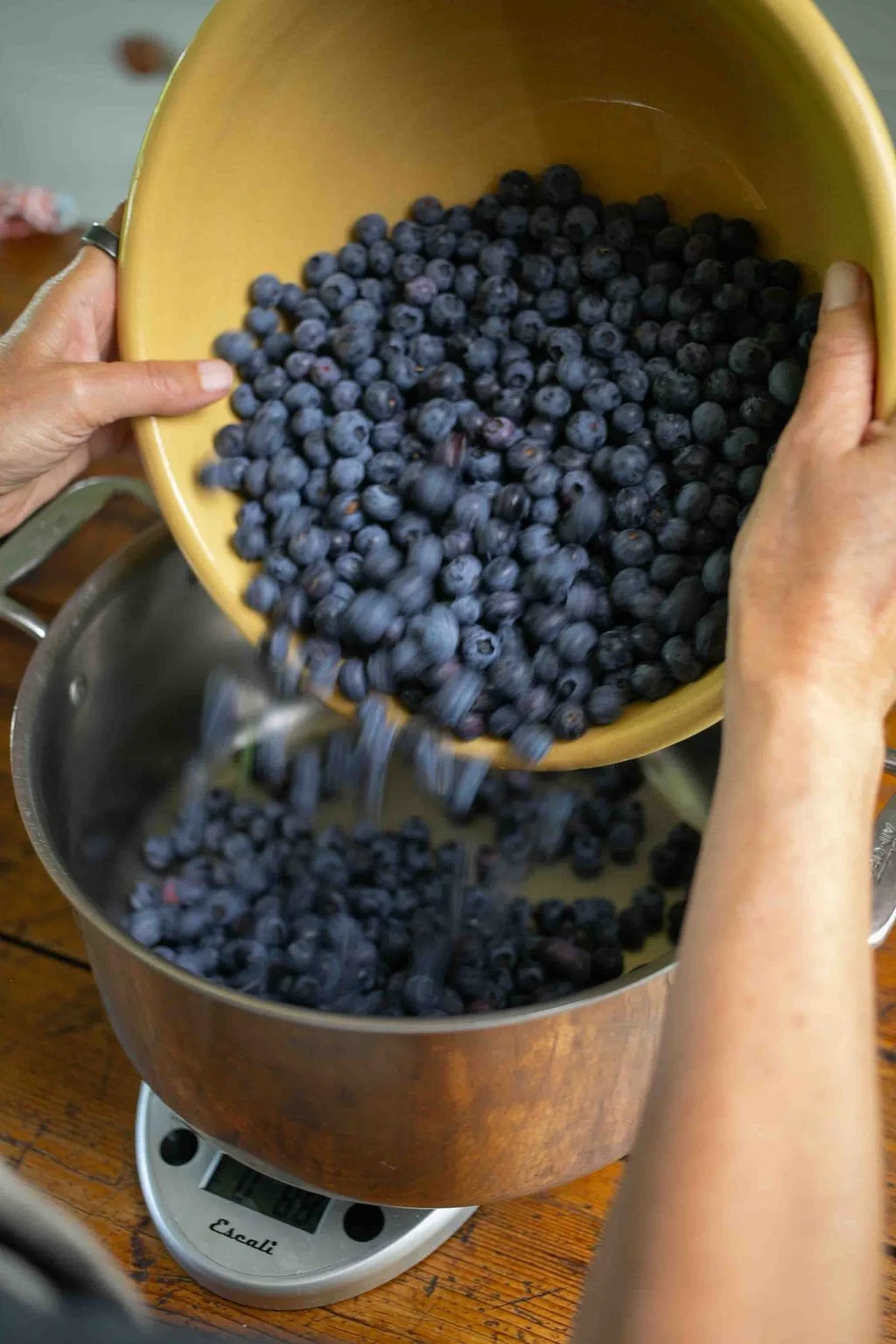
Our second year on the farm, we doubled the blueberry patch with an assortment of highbush varieties from Fedco in Maine. Blueberries prefer acidic soil and ours happen to be planted proximal to a pine stand, an ideal companion. We’ve yet to have our wits about us enough, come October, to rake the pine needles into tidy dressing for each plant but perhaps this will be the year. Blueberries are indigenous to New England where the low bush variety grows wild throughout the region. Smaller in stature and in berry, it is hard to rival the thrill of happening upon a wild stand while hiking along the coast of Maine.
Blueberries were first domesticated in 1911 through the ingenious work of a USDA scientist, Frederick Coville, and a Cranberry farmer, Elizabeth White. Later, in the 1930’s, a Vermonter named George Darrow assumed the helm of the USDA blueberry breeding program and proliferated high bush seedlings throughout the region, including his brother’s nursery in Putney. Today there are over 100 cultivars grown for commercial purposes, divided into five categories: northern highbush, southern highbush, rabbiteye, lowbush and half-high. If you’ve ever been to a you-pick, you’ve most likely pilfered fruit from a highbush of some sort, whose taller varieties reach six to seven feet, making harvest a cinch.
Of the many ways to consume blueberries, jam had never made it to the top of my list until this July when we started research and testing for Fell Fields’ future products. (!!!) High summer is a time of absolute chaos for us as we juggle full time jobs and a farm that needs as much as we can give, plus another fifty percent. Taking several hours to spin up a batch of jam feels unreasonable when new trees are threatening to drop fruit from drought and weeds are menacing our chicory transplants. Unreasonable, perhaps, but what a payoff.
Despite having grown up with a professional chef for a mother, jam making never played too heavy of a starring role in our kitchen. I recall the occasional rasberry coulis and many a jar of lemon curd but we weren’t the pantry with jars stacked four high of preserved seasonal fruit. During my decade of living in Oakland, I had the great privilege of enlisting in a marmalade class with June Taylor, arguably one of the best in the craft. Heath and I spent a day learning how to properly supreme citrus and achieve the perfect ‘set’, neither runny nor overly firm. This was also the heyday of Sqirl in LA where Jessica Koslow was putting out small batches of farm forward jams with interesting herbal and spice notes. Just down the street from us, Rachel Saunders was slinging her own rendition, called Blue Chair Fruit, at the Grand Lake farmers market. She would go on to write the one of the most definitive contemporary jam books aptly titled The Blue Chair Jam Cookbook, which still guides me today.
I subscribe to the ‘no commercial pectin’ approach of making jam, relying instead on the right balance of inherent pectin in the fruit, sugar and acid. Currants are a great example of high pectin fruit, easy to coax into a proper set with sugar alone. Our black currant plants are some of our most vigorous, as am I about their fruit. Currants are not for the picky eater. As Nigel Slater writes, “The fact that the black currant is essentially a cook’s fruit, of no interest in the fruit bowl, is partly why I have such affection for it. I applaud the fact that it’s appeal isn’t instant, like a peach or a nectarine. It is part of why I am a cook.”
I jarred three batches of black currant jam, one with thyme. A dollop over plain greek yogurt is on heavy breakfast rotation, it’s tart overture a beautiful high note. Same with ice cream where the syrupy sweetness begs for balance. I dust it with a little flaky sea salt to round it all out. Heath likes to spread it over sourdough bread for a turkey sandwich, a nod to what cranberry is attempting but better, way, way better.
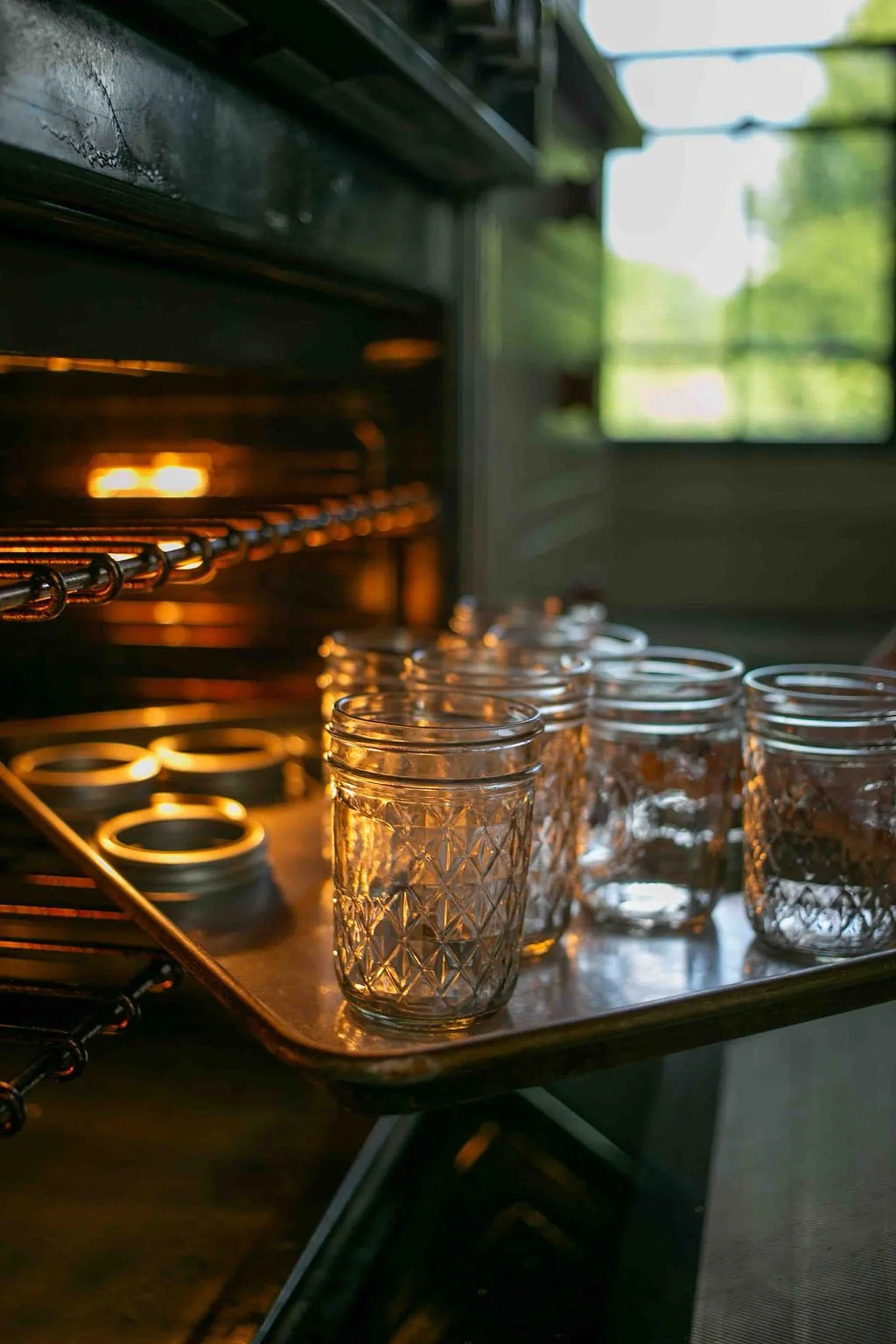
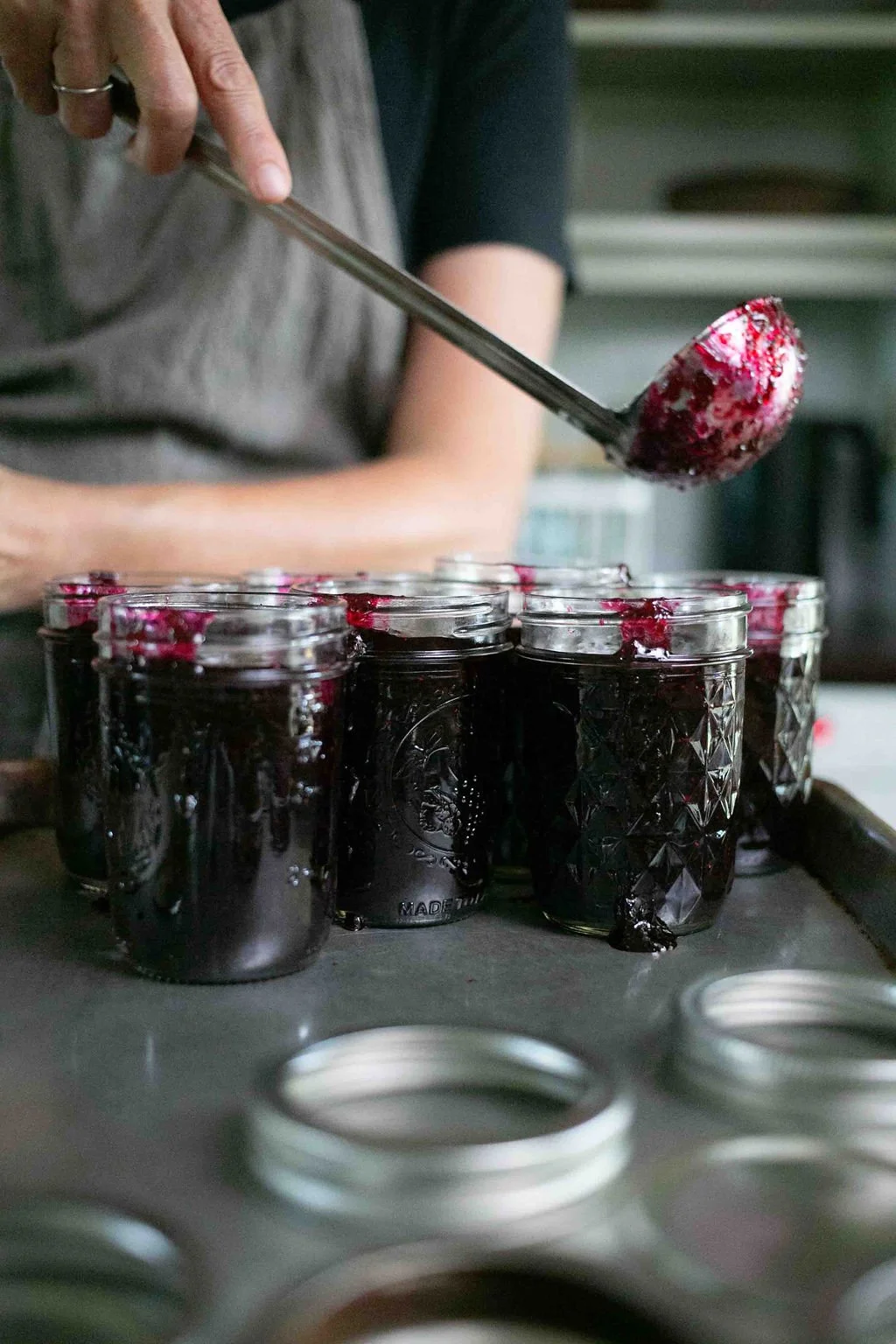
Blueberry jam came next, also three batches. Tarragon made an appearance, same with mint, both from our herb patch. I prefer the tarragon with it’s savory anise sultriness. It lends a sophistication to the typical crowd pleasing berry, think smoking jacket and velvet slippers. Perfect on toast layered with salted butter. I experimented with different canning methods, mostly favoring hot fill where you ladle 188 degree or higher jam into hot, sterilized jars, lid them, and turn them upside down to seal. My afternoon of zoom meetings was fabulously interrupted by the song of sealing lids pinging arrhythmically two rooms away.
Blueberry Tarragon Jam
Adapted from Blue Chair Jam Cookbook
5 sprigs of tarragon, bundled with twine
2.5 pounds of blueberries
1.5 pounds of organic cane sugar
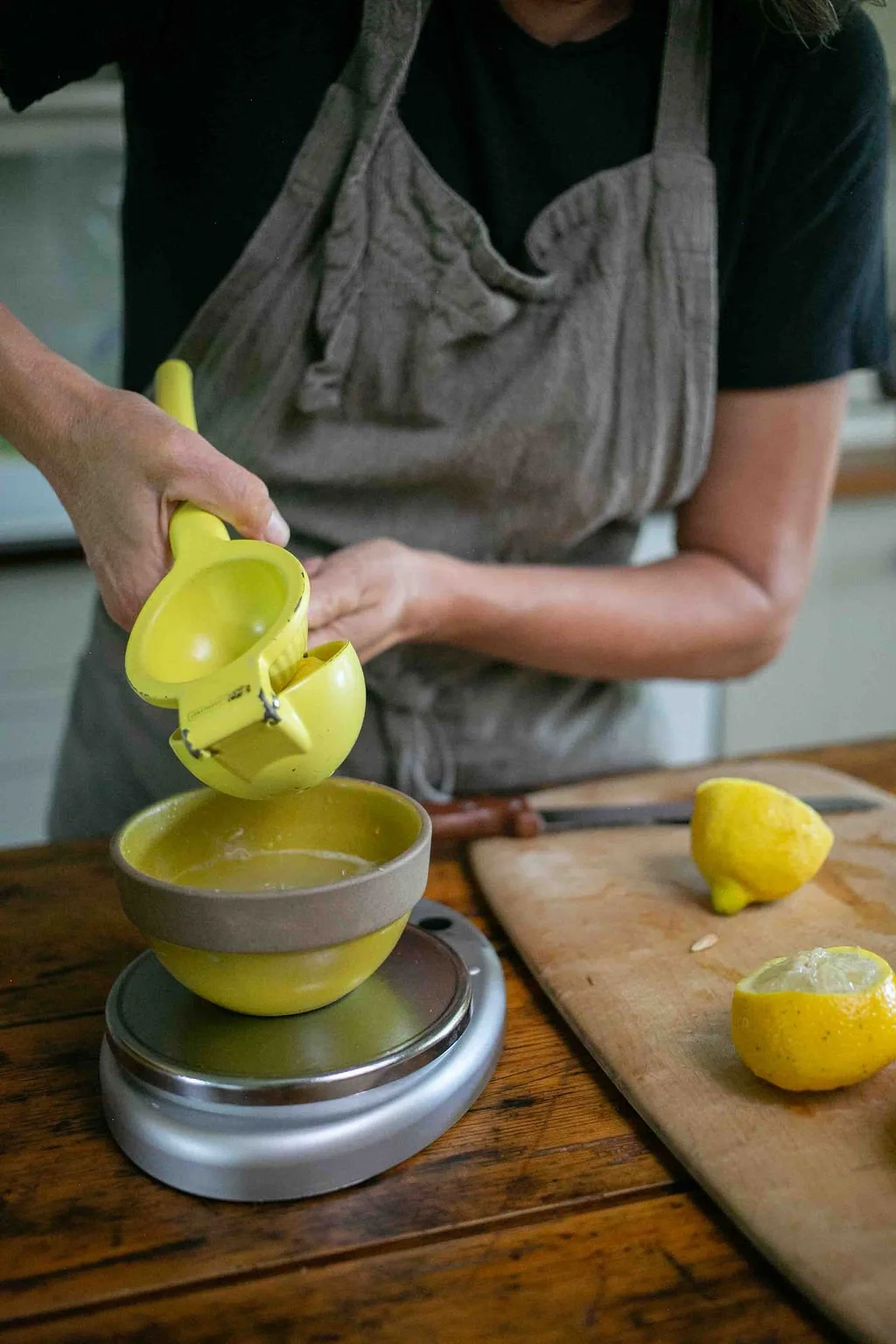
6 oz. freshly squeezed lemon juice
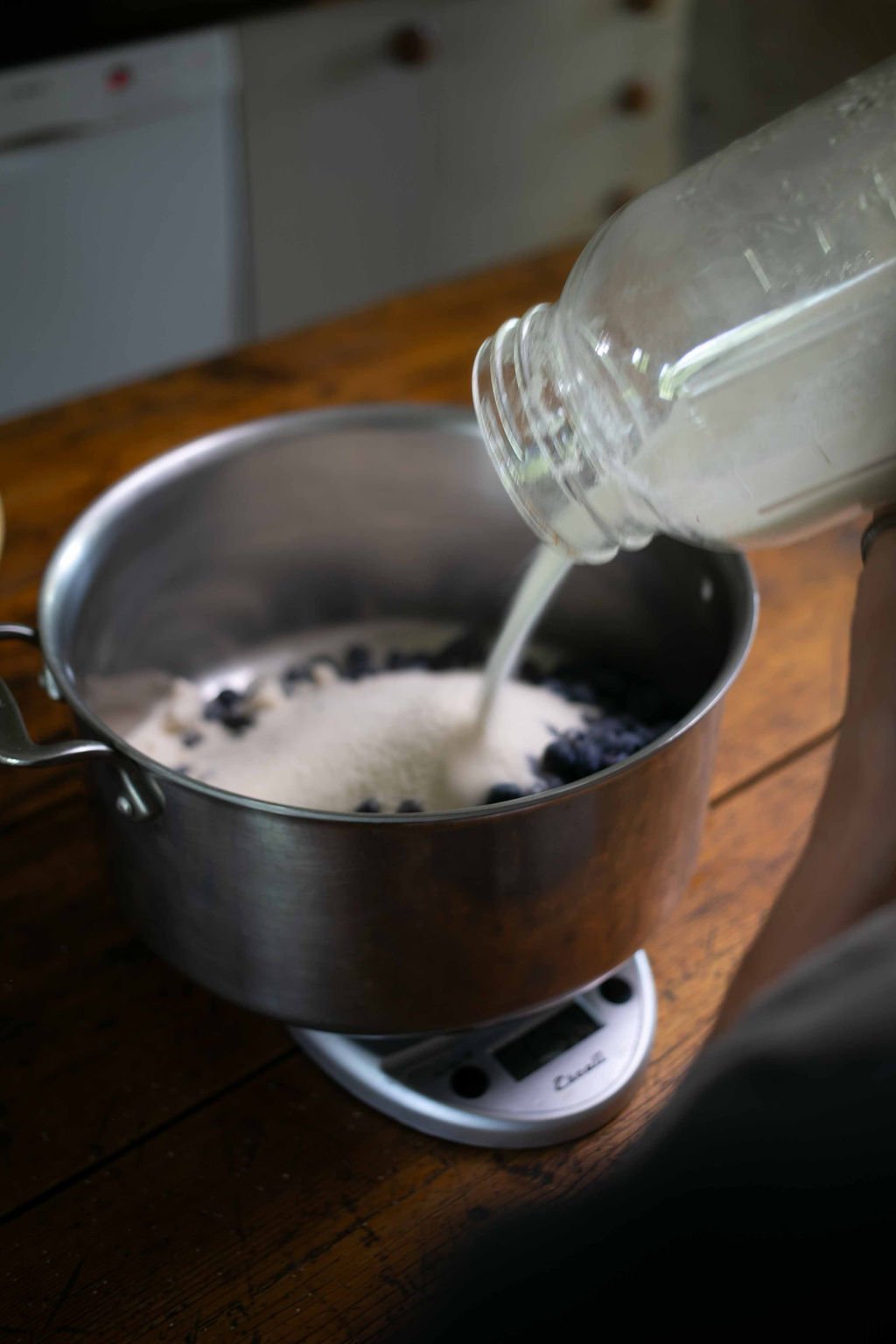
Combine the blueberries, sugar and lemon juice in a large sauce pan, preferably 10-12 quarts. If you have a proper copper jam pan, even better. We do not. Yet. So I used our largest sauce pan typically used for large soups or pasta water.
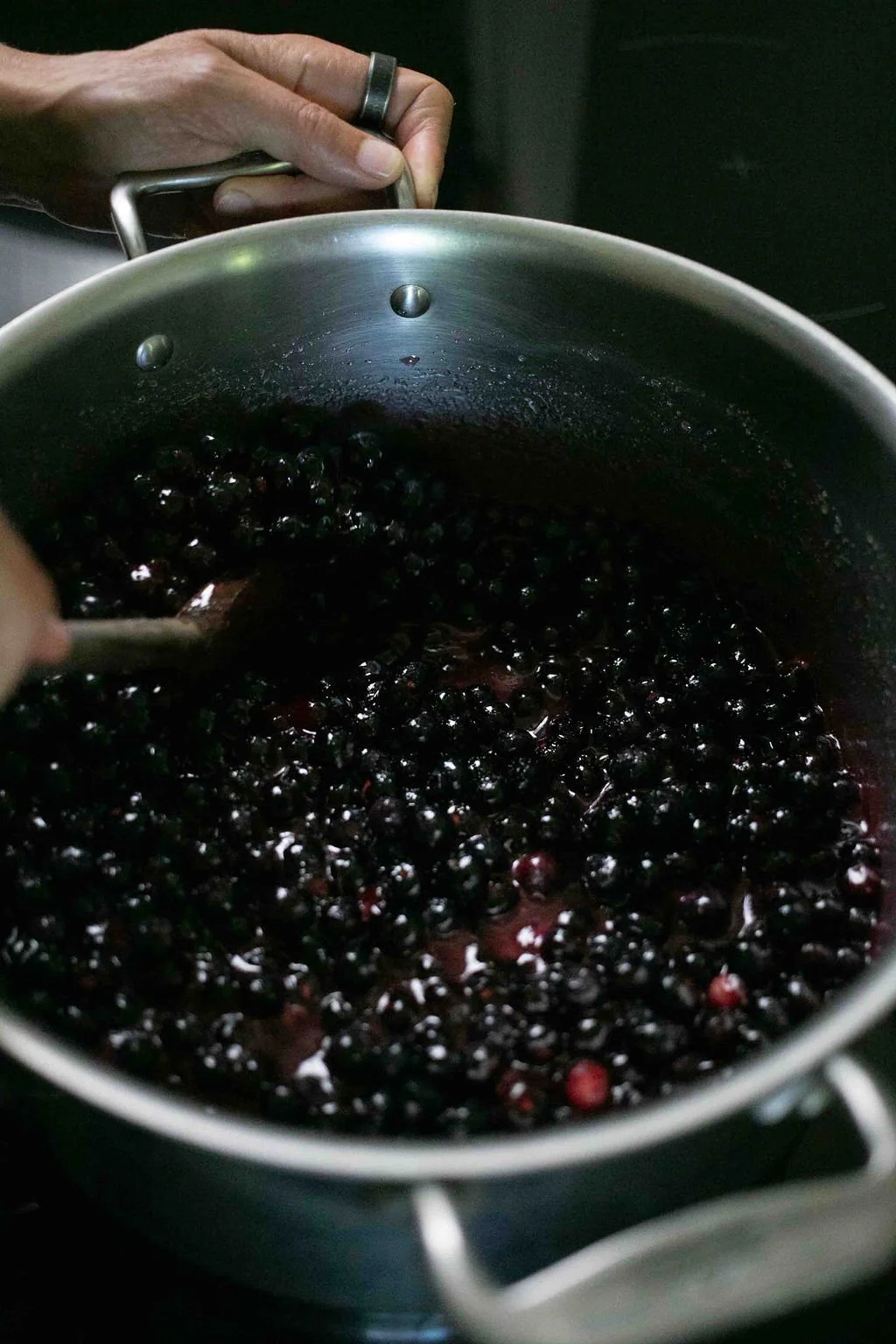
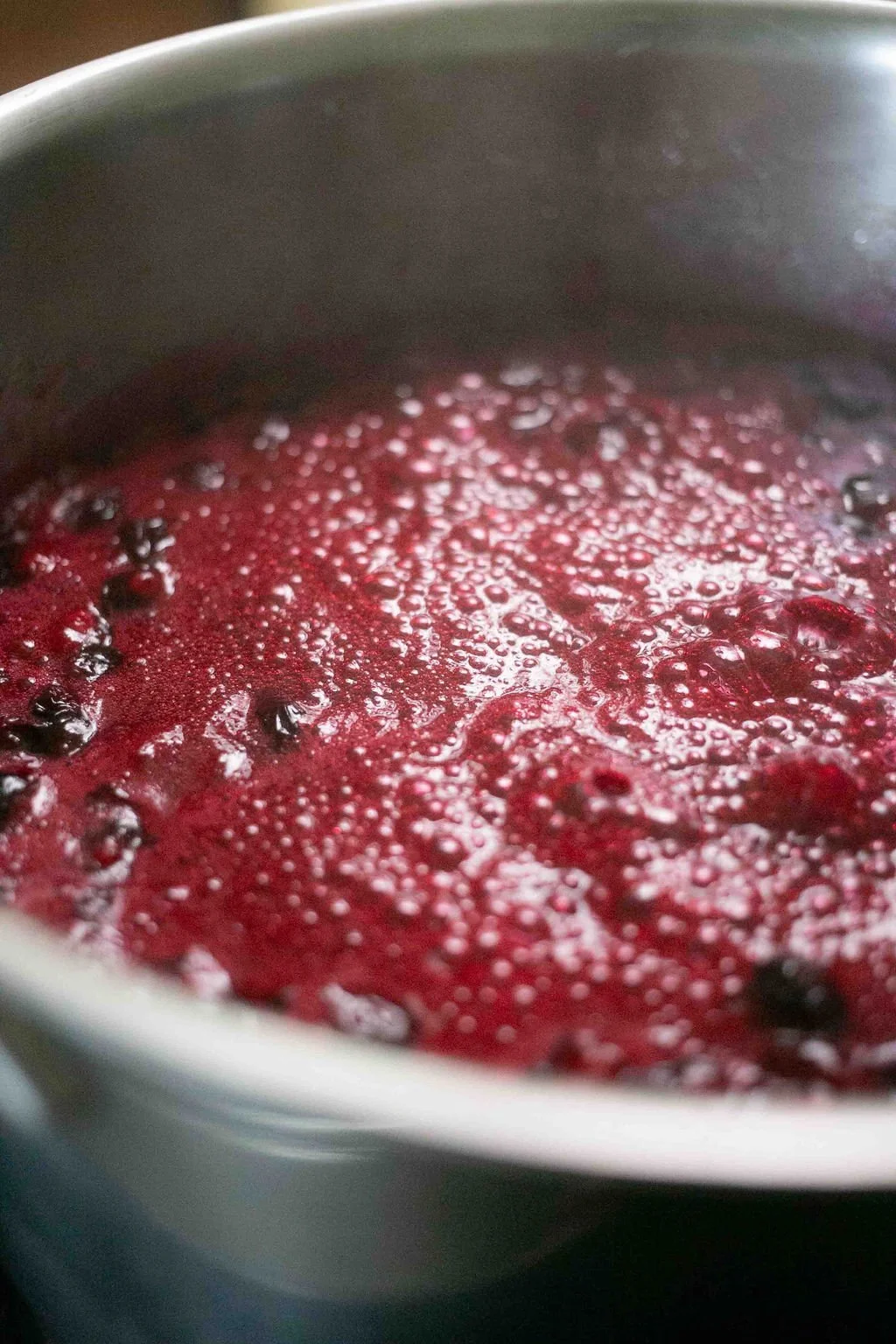
Bring it up to a simmer on medium-high heat, stirring often. When the berries start to really break down, turn it up to high and continue cooking until the mixture boils. You want to be stirring this constantly so it doesn’t stick or boil over.
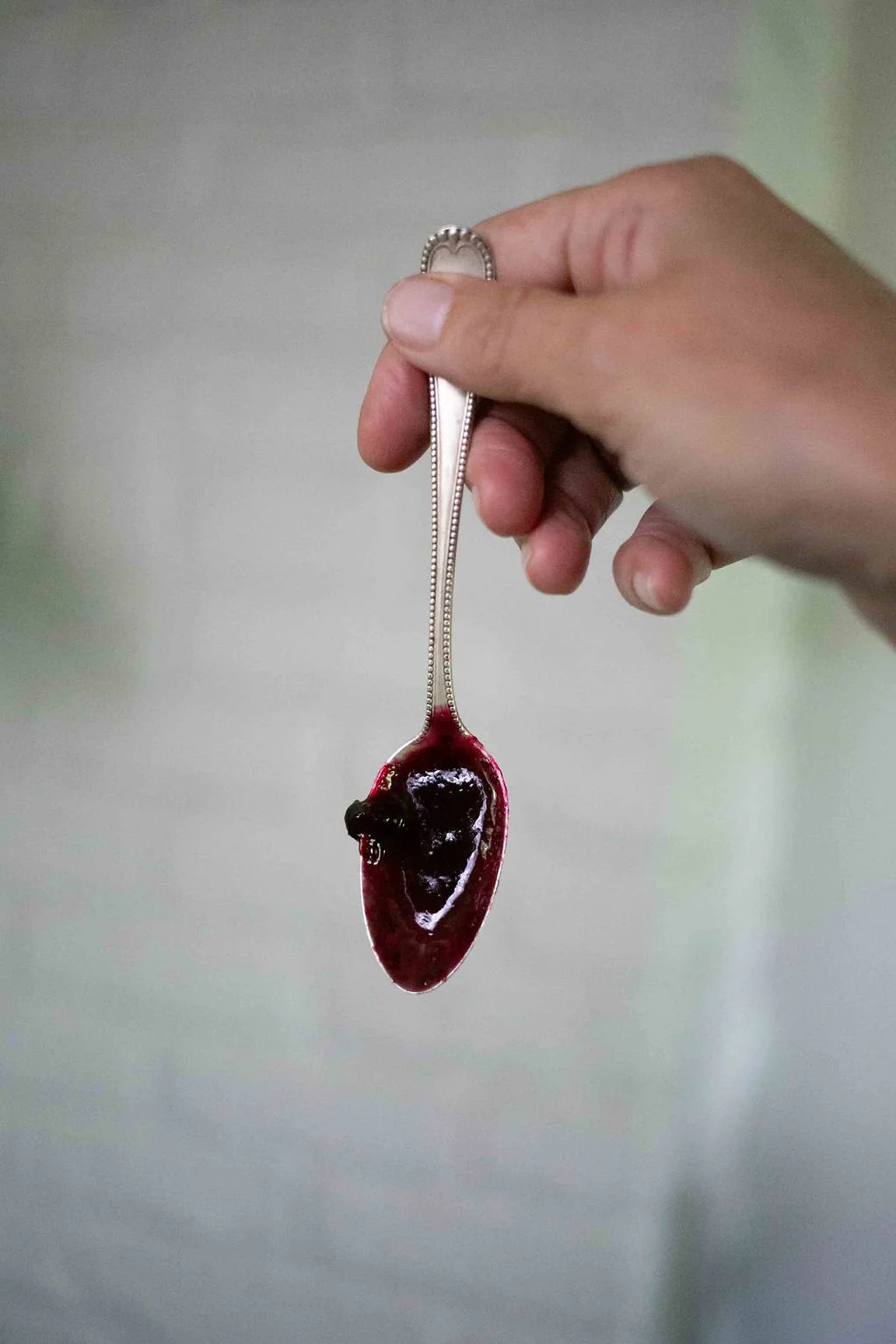
Cook at a boil for ten to fifteen minutes, again, stirring constantly. You can begin testing for set at around ten minutes. Many jam makers suggest using the frozen spoon method, which involves placing 3-4 teaspoons on a saucer in the freezer before you begin making jam. When ready to test, remove one and fill it about halfway with jam. Replace it on the saucer in the freezer, flat, wait 3-4 minutes until it’s no longer warm to the touch and hold the spoon vertical. If if doesn’t run, voila, you have set. If it does, repeat a few minutes later.
Once you’ve achieved set, turn off the heat and toss in the tarragon bundle. Steep for 3 minutes, taste. You can steep for as long as you want to achieve the desired taste. I left mine in for about 5 minutes. Discard the tarragon and can according to your preferred method.